POLICIES
HOMEWORK POLICY 2020 RECOMMENDATIONS AND
GUIDELINES FOR SCHOOLS
As per the National Homework Policy 2018 released by Ministry of Education, Homework is Teacher-assigned and teacher-monitored work that students are asked to do outside of the classroom context, related to and supportive of the learning that takes place in school. Homework can be of various formats including play. It is a purposeful learning task related to the topic, assigned to the students by the teacher in order to keep them meaningfully involved outside the classroom and to provide opportunities for students to be responsible for their own learning. The aim of homework is to reinforce, practice and refine the knowledge and skills learnt in the class, to provide them with the opportunity for learning beyond the classroom, to encourage them to take initiative and responsibility of self-regulated learning and study beyond what was explained and further keep them engaged through task completion and self-discipline.
Homework assignments that increase the effectiveness and quality of homework include:
- work that is directly related to what has already been explained and/or practiced in class
- work that gives students the opportunity to practice what they have already learnt in class by engaging in activities that help them understand more deeply the content or practice procedures they have been introduced to in class
- work that gives students the opportunity to apply what they have already learnt in class
- work that offers students the opportunity to be creative and further explore their interests in relation to what has already been taught in class
- work that allows students in the last 3 years of secondary school, to benefit from homework that encourages them to prepare for a topic that will be explored in class; this will assist students to identify what they already know about the topic or read about the topic prior to it being introduced in class
The hours of Home Work for different grades is as follows:
| S.No. | Class | Hours of Homework |
| 1. | PS - II | No Homework |
| 2. | III - V | 2 hours per week |
| 3. | VI- VIII | 1 hour per day |
| 4. | IX - XII | 2 hours per day |
Diversity of homework/ Choice of homework - Considering the different learning needs of students, homework assignments may need to vary. It is also helpful to give students some choice in homework tasks to encourage them to have more ownership of their learning. There are three major kinds of meaningful homework assignments:
- Practice homework: Work that reviews and reinforces skills, concepts, dispositions and values taught in class; the more the students understand what they have learnt, the more effective the homework will be.
- Extension homework: Work that assists students to explore and refine their learning by applying what they have learnt through problem solving, and thinking creatively and critically; it helps students make connections between what they have learnt and the real world.
- Preparation homework: Work that prepares students in a general manner for a forthcoming lesson or topic. This is effective for the last three years of secondary schools. It will assist students to identify their prior knowledge and bring their life experiences as they relate to the topic at hand. Preparation homework is NOT meant to substitute a lesson or class.
Reporting of homework: Homework is meant to be part of formative rather than summative assessment; that is, homework is part of assessment for learning and not assessment of learning. Homework should not be included in report cards since homework is primarily meant to support learning that has taken place in class. If students regularly miss homework, every case needs to be investigated on the basis of its context; it is important that students take responsibility to complete homework.
Role of Parents: The roles and responsibilities of the family in relation to homework include:
- Develop a positive and productive approach to homework
- Read the homework alongside students in early years to ensure clear understanding, and when applicable involve the students in learning opportunities during every day activities at home
- Assist students to strike a balance between homework, family time, and recreational activities
- Offer assistance to children whose first language is different from the language of teaching by discussing the homework in the student’s first language
- Take on a supervisory role and provide partial assistance to students instead of doing the assignment for them
- Provide a suitable place for the students to complete their homework; for younger learners it might be helpful to assign a particular time to the homework
- Parents and guardians are encouraged to assist their children, even when homework is not provided, by reading to/with them, and get their children involved in activities such as sports, crafts and cultural activities
SCHOOL BAG WEIGHT POLICY 2020
RECOMMENDATIONS AND GUIDELINES FOR SCHOOLS
- As School Bag Policy 2020:The government of Delhi has issued guidelines to reduce the weight of school bags for the students in primary, secondary as well as senior secondary levels. According to the guidelines which had been formulated by experts from NCERT, CBSE, Kendriya Vidyalaya Sangathan (KVS) and Navodaya Vidyalaya Samiti (NVS), the weight of the school bag should be at a maximum of 3.5 kgs to 5 kgs. The guidelines have been issued under the School Bag Policy 2020,
- As per the School Bag Policy of India, 2020 released by NCERT, the bag limit must be as follows:
| S.No. | Class | Average Body Weight of children (in Kg) | Bag Weight Range (Recommended) (in kg) |
| 1. | Pre-Primary | 10-16 | 0.5-1 |
| 2. | Classes I & II | 16-22 | 1.6-2.2 |
| 3. | Classes III to V | 17-25 | 1.7-2.5 |
| 4. | Classes VI & VII | 20-30 | 2-3 |
| 5. | Class VIII | 25-40 | 2.5-4 |
| 6. | Classes IX & X | 25-45 | 2.5-4.5 |
| 7. | Classes XI & XII | 35-50 | 3.5-5 |
- Designing of School Bag-The School Bag needs to have compartments and should contain two padded and adjustable straps that can squarely fit on both the shoulders, to prevent any ‘digging’ effect at the shoulder. The length of the straps should be adjustable to suit the individual needs of different Wheeled carriers should not be allowed as it may hurt children while climbing stairs.
- Flexibility in the school time-table—The school time table is student friendly. The school time table is flexible providing adequate space for sports and physical education, reading of books available in school other than the textbooks, art and crafts etc.
- Monitoring of School Bag Weight-Weight of the school bag of classes I to V will be monitored quarterly. Information regarding excessive bag weight will be shared with the parents for taking corrective measures.
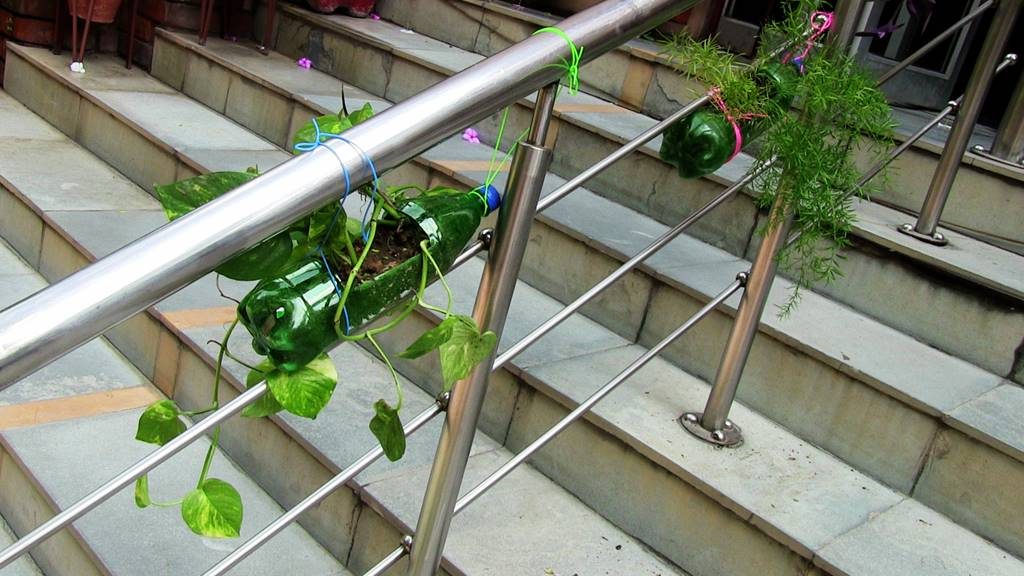
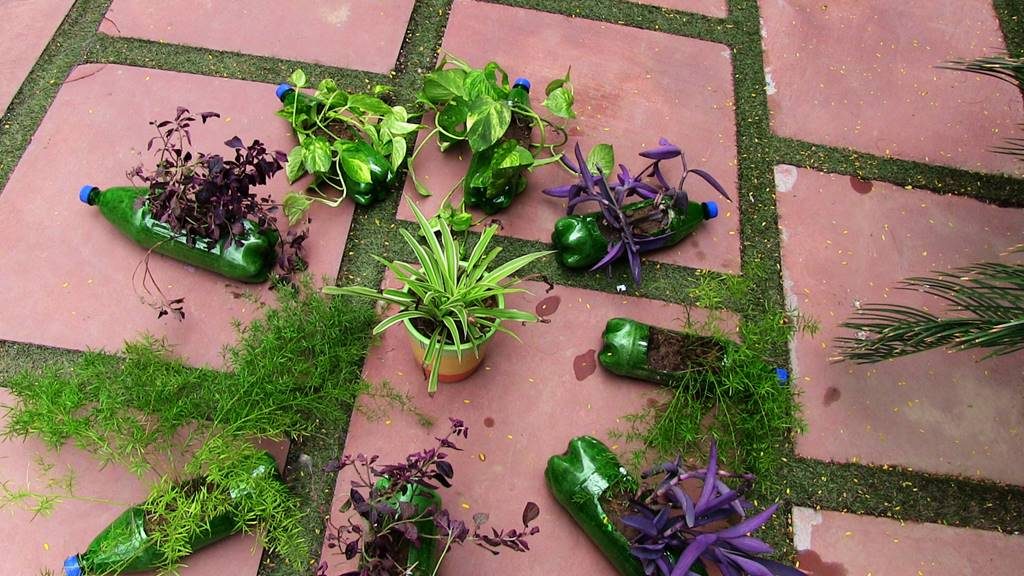
The environment is an important aspect of human life. We are interdependent on environment for our survival. We should protect our environment just as we protect our lives. Bal Bharati Public School, Rohini has always had a cautious approach to the environment. We continuously try our best to work for the environment and protect it. The focus of Eco-Club has always been the schemes by which we can work best and in systematical manner for environment. Green day is celebrated to create awareness among the students towards their environment.
Environmental Policy of the school
- To create "a clean and green consciousness" among students through various innovative methods.
- To create awareness of biodiversity conservation and local environmental issues among school children.
- Making efficient use of Natural Resources by conserving energy and water.
- Minimization of all type of wastes and promotion of economic utilization of different types of waste that are generated in premises.
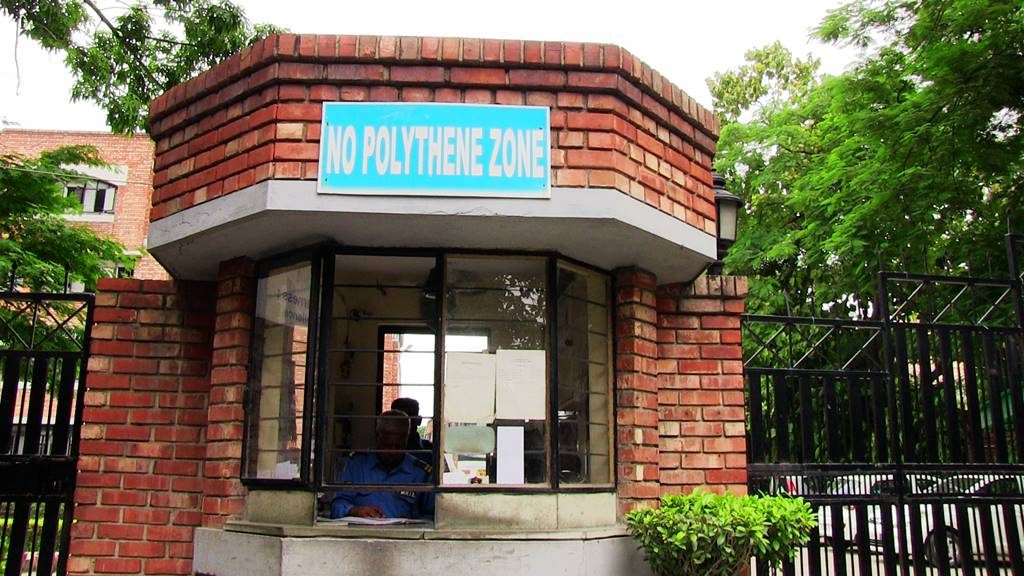
- School is striving continuously to promote awareness about e-waste and we also believe in curtailing plastic bags/Polythene bags. Our school is a "No Plastic Zone".
We request all our parents, students and staff to adopt the Policy.
The Constitution of India guarantees several rights to children and enables the State to make provisions to ensure that the tender age of children is not abused. Child Abuse was and continues to be, one of the most heinous crimes designed and perpetuated by human beings against some of the most vulnerable and defenseless sections of the community. Globally, it has been recognized and seen as a particularly burdensome challenge. According to the World Health Organization, “Child maltreatment, sometimes referred to as child abuse and neglect, includes all forms of physical and emotional ill-treatment, sexual abuse, neglect, and exploitation that results in actual or potential harm to the child’s health, development or dignity. Within this broad definition, five subtypes can be distinguished — physical abuse; sexual abuse; neglect and negligent treatment; emotional abuse; and exploitation”.
- TYPES OF ABUSE
1. Physical Abuse: Includes hitting, kicking, punching, biting, burning, shaking, drowning, smothering and giving drugs or alcohol (includes corporal punishment)
Possible Symptoms:
- Frequent injuries or unexplained bruises, fractures, welts, burns or cuts
- Depression and anxiety and/or aggression and violence.
- Problems with relationships and socializing / distant and withdrawn.
- Wears inappropriate clothing to cover up injuries, such as a coat on warm days.
- Running away
- Sleeps in Class /appears drowsy
2. Emotional Abuse: Includes threats, humiliation, sarcasm, degrading punishments, undermining confidence.
Possible Symptoms:
- Possible delayed physical, emotional and mental development.
- Being unable to play or socialize well with others
- Fearful of making mistakes
- Self-harm
- Sudden speech disorders or neurotic behaviour such as rocking
- Low self-esteem / confidence
- Crying inconsolably
3. Sexual Abuse: Includes kissing, touching genitals or breasts, vaginal or anal intercourse, oral sex, and encouraging to look at pornography, trading grades for sexual favors.
Possible Symptoms:
- Aggressive behaviour, risk taking and missing school or running away.
- Sleep problems and bed-wetting or soiling.
- Negative thoughts / not looking after themselves / low self esteem
- Displaying sexually inappropriate behaviour
- Anal or vaginal soreness
- Unexplained bleeding from private parts.
4. Substance Abuse : Includes intake of Psychoactive /alcoholic /narcotic substance /tabacco or engage in buying or selling of any above mentioned substance.
Possible Symptoms:
- Aggressive bahaviour, risk taking, missing school. Stealing
- Low self-steem/ confidence
- Unable to socialize well with others
- Day dreaming lethargic
5. Neglect: Includes lack of food, medical attention, supervision, clothing etc.
Possible Symptoms:
- Delayed development
- Poor hygiene, unwashed clothes or inadequate clothes
- Untreated medical conditions
- Being hungry or tired all the time
- Missing school or difficulties with school work
- Poor self esteem
- Withdrawn and difficulty making friends and/or anti-social behavior
GUIDING PRINCIPLES OF THE POLICY
- Protection : Safety and security of all children is integral to their well-being and children are to be protected from all forms of harm, abuse, neglect, violence, maltreatment and exploitation in all settings including care institutions, schools, hospitals, creches, families and communities.
- Best Interest of the Child : Best interest of the child is the primary concern in all decisions and actions affecting children, whether taken by legislative bodies, court of law, administrative authorities, public, private, social, religious or cultural institutions to ensure their personality development.
- Confidentiality : Children's right to privacy and confidentiality should be protected in cases of abuse.
- Non-Stigmatisation and Non-Discrimination : Each child irrespective of circumstances, as well as socio-economic, cultural, religious and ethnic backgrounds should be treated equally and in a dignified manner.
- TEACHER’S ROLE
Be familiar with your school’s child protection policy, procedure and know who is the child protection lead in with your department. Ensure the students are also aware about reporting the abuse.
Disclosures:
- Listen to the child, reassure them that they have been brave but do not investigate.
- Explain to the child that you have to talk to the child protection lead as you need to see what can be done. Explain that you will only speak to people who need to know.
- Act immediately and report to the child protection lead so an assessment of risk can take place. Any delay could leave the child in danger.
- Keep records of all conversations and actions taken.
- Be transparent with the child so that he/she can be involved at each stage.
Suspicions:
- Pass on all concerns to the child protection lead in your department. No matter how small.
- Keep records of any concerns.
- GENERAL DO’S:
Be vigilant at all times, in case of a discloser follow the given instructions:
- Immediately tell the child that you believe in him/her.
- Keep your own body language calm and composed.
- Use the language in which the child is comfortable.
- Acknowledge it is difficult to talk about such things.
- Tell the child this happens to other children also and that he/she is not the only one.
- Tell him/her that he/she is not responsible for what happened and did not deserve it.
- Tell him/her that sometimes adults do things that are not OK (avoid saying that the offender is "sick"). Everything you can to support, comfort and reassure the child.
- Explain to the child that the teacher needs to share the discloser with the concerned authorities in the benefit of the child.
- Make notes of facts of the disclosure after the child has left and fill the Child Protection Form.
- GENERAL DON’TS:
In case of a discloser follow the given instructions:
- Do not investigate, JUST LISTEN.
- Do not make the child repeat with the discloser.
- Do not make notes or do recordings in front of the child.
- Do not take confessions in writing.
- Do not make false promises.
- Do not share the incident with people who do not need to know about it.
- Do not delay reporting the incident to the authorities/departmental heads beyond 24 hours.
ASPECTS OF CHILD PROTECTION
A child needs protection from people with unhealthy attitude present in the School campus. These include other School students, administrators, teachers and rest of the School staff (1.e., cleaning agency workers, office staff, security workers, etc). Child protection can be ensured through appropriate action against bullying; corporal punishment; any sort of physical, verbal or sexual abuse and indiscipline, violence or substance abuse. Therefore, Child protection policy includes sub-policies namely-
- Anti Corporal Punishment Policy
- Anti Bullying Policy
- School Discipline and Substance Abuse Policy
ANTI CORPORAL PUNISHMENT POLICY
The Right of children to Free and Compulsory Education Act (RTE, 2009), clearly states that no child shall be subject to “physical punishment or mental harassment” in schools. Those officials that contravene this provision shall be liable for disciplinary action under service rules applicable to them.
It is not easy to define corporal punishment as it involves humiliation and insult which a child feels as a subject. Considering the millions of ways in which punishment is perpetrated on children in contemporary times, it is impossible to exhaust all the forms of insinuations and violence. However, following behaviour has been categorically put under Anti corporal policy of the school.
1.Physical punishment is understood as any action that causes pain, hurt/injury and discomfort to a child, however light. Examples of physical punishment include but are not restricted to the following:
a) Causing physical harm to children by hitting, kicking, scratching, pinching, biting, pulling the hair, boxing ears, smacking, slapping, and spanking or with any implement (cane, stick, shoe, chalk, dusters, belt, whip, giving electric shock etc.)
b) Making children assume an uncomfortable position (standing on bench, standing against the wall in a chair-like position, standing with schoolbag on head, holding ears through legs, kneeling etc.)
c) Forced ingestion of anything (for example: washing soap, mud, chalk, hot spices etc.)
d) Detention in the classroom, library, toilet or any closed space in the school.
2. Mental harassment is understood as any non-physical treatment that is detrimental to the academic and psychological well-being of a child. It includes but is not restricted to the following:
a) Sarcasm that hurts or lowers the child’s dignity; Calling names and scolding using humiliating adjectives, intimidation;
b)Using derogatory remarks for the child, including pinning of slogans;
c) Ridiculing the child with regard to his/her background or status or parental occupation or caste;
d) Ridiculing the child with regard to his/her health status or that of the family — especially HIV/AID Sand tuberculosis;
e) Belittling a child in the classroom due to his/her inability to meet the teacher’s expectations of academic achievement;
f) Punishing or disciplining a child, not recognizing that most children who perform poorly in academics are actually children with special needs. Such children could have conditions like learning disability, attention deficit hyperactivity disorder, mild developmental delay etc.
g) Using punitive measures to correct a child and even labeling him/her as difficult; such as a child with attention deficit hyperactivity disorder who may not only fare poorly in academics, but also pose a problem in management of classroom behaviors;
h) ‘Shaming’ the child to motivate the child to improve his performance and
i) Ridiculing a child with developmental problems such as learning difficulty or a speech disorder, such as, stammering or speech articulation disorder.
3.Discrimination is understood as prejudiced views and behaviour towards any child because of her/his caste/gender, occupation or region and non-payment of fees or for being a student admitted under the25% reservation to disadvantaged groups or weaker sections of society under the RTE, 2009. It can be latent; manifest; open or subtle. It includes but is not restricted to the following:
a) Bringing social attitudes and prejudices of the community into the school by using belittling remarks against a specific social group or gender or ability/disability;
b) Assigning different duties and seating in schools based on caste, community or gender prejudices for example, cleaning of toilets assigned by caste; task of making tea assigned by gender); admission through 25% reserved seats under the RTE; or non-payment of any prescribed fees;
c) Commenting on academic ability based on caste or community prejudices and
d) Denying a facility like library books or uniforms or sports facilities to a child or group of children based on caste, community, religion or gender.
CODE OF CONDUCT
INAPPROPRIATE/OFFENSIVE BEHAVIOUR OF STAFF AND EMPLOYEES
- Hit or otherwise physically assault a child.
- Use language that will mentally or emotionally abuse the child.
- Act in any way that intends to embarrass shame, humiliate or degrade a child.
- Show discrimination of race, culture, age, gender, disability, religion, sexuality, political persuasion or any
- other status.
- Develop a sexual relation with a child.
- Kiss, hug, fondle, rub or touch a child in an inappropriate or culturally insensitive way.
- Initiate physical contact unless initiated by the child (e.g. holding hands).
- Suggest inappropriate behaviour or relations of any kind.
- Allow children to engage in sexually provocative games with each other.
- Stand aside when they see inappropriate actions inflicted by children on other children because it is frequent and commonplace.
ACTION TO BE TAKEN BY TEACHERS
As teachers if one is concerned that one of the child has any signs of abuse it is vital toreport to the Principal who will keep a written record of any factual statement of concern regarding a child.
CHILD PROTECTION IS ALSO ABOUT YOUR OWN PROTECTION SO PLEASE REMEMBER THAT YOU ARE TO ONLY REPORT THE INCIDENT AND NOT TAKE ANY ACTION AFTER DISCLOSURES.
ANTI BULLYING POLICY
Bullying is behaviour by an individual, repeated over time that intentionally hurts another individual or group. It can be in the physical, verbal, emotional or cyber domain. It is any act or gesture (written, verbal, graphic, or physical) that is reasonably perceived as being dehumanizing, intimidating, hostile, humiliating and threatening and likely to evoke fear of physical harm or emotional distress.
The following types of bullying behaviour are included in this non-exhaustive definition
- deliberate exclusion, malicious gossip and other forms of relational bullying,
- cyber-bullying,
- identity-based bullying such as homophobic bullying, racist bullying,
- Bullying of those with disabilities or special educational needs.
- hurtful public message, image or statement on a social network site or other public forum
- where that message, image or statement can be viewed and/or repeated by other people will be regarded as bullying
Bullying undermines and dilutes the quality of education. Research shows that bullying can have short and long-term effects on the physical and mental well-being of pupils, on engagement with school, on self- confidence and on the ability to pursue ambitions and interests. Therefore, the policy aims to create an environment where students can grow and flourish without fear.
An anti-bullying policy should always endeavor to complement a school’s policy on behavior and discipline. There is also a need to regularly reinforce and review the policy so that newcomers to the school understand the school’s stance on bullying and so that existing pupils and parents are reminded that bullying, in whatever form, will never be tolerated.
POLICY GUIDELINES
- The Head of the Institution will be responsible to determine whether an alleged act constitutes a violation of this policy.
- The Policy prohibits reprisal or retaliation against any person who reports an act of bullying or harassment or cooperates in the investigation.
- The policy prohibits any person from falsely accusing another as a means of bullying or harassment.
- School officials will disseminate the policy annually to all school staff, students, and parents, along with a statement explaining that it applies to all applicable acts of harassment if bullying occurs on school property, at school-sponsored functions, or on a school bus.
- Involvement of parents through regular meetings with HM/Class teacher/Counselor. The school recognizes the need to work in partnership with and keep parents informed on procedures to improve relationships on a school-wide basis.
CODE OF CONDUCT
Behavior protocol for children
i. Respect all staff, teachers, parents and outsiders
ii. All relevant information should always be given to the concerned staff
iii. Share information and learning with other children
iv. Never physically assault or sexually abuse another child
v. | Never tease another child or call out nicknames
vi. Never threaten another child
vii. Never spread rumors about another child, or details about the child which could be socially humiliating
viii. Never force another child to give away his/her personal belongings
ix. Never use abusive language
This protocol must be encouraged by staff among children.
Expected Behavior of school staff
i. The school promotes habits of mutual respect, courtesy and an awareness of the interdependence of people in groups and communities.
ii. The school promotes qualities of social responsibility, tolerance and understanding among all its members both in school and out of school.
iii. Staff members share a collegiate responsibility, under the direction of the Principal, to act in preventing bullying/aggressive behavior by any member of the school.
The following are some practical tips for immediate actions that can be taken to help build a positive school culture and climate .
- Explicitly teach pupils what respectful language and respectful behavior looks like, acts like.
- Display key respect messages in classrooms, in assembly areas and around the school. Involve pupils in the development of these messages.
- Catch them being good - notice and acknowledge desired respectful behavior by providing positive attention.
- Consistently tackle the use of discriminatory and derogatory language in the school.
- Give constructive feedback to pupils when respectful behavior and respectful language are absent.
- Have a system of encouragement and rewards to promote desired behavior and compliance with the school rules and routines.
- Explicitly teach pupils about the appropriate use of social media, mobile phone and internet use.
- Follow up and follow through with pupils who ignore the rules actively and tackle bullying behavior.
- Involve parents and/or the Parents’ Association in awareness raising campaigns around social media.
- Actively promote the right of every member of the school community to be safe and secure in school.
- Highlight and explicitly teach school rules in pupil friendly language in the classroom and in common areas.
- All staff must watch out for signs of bullying behavior.
- Ensure there is adequate playground/school yard/outdoor supervision.
- School staff can get pupils to help them to identify bullying “hot spots” and “hot times” for bullying in the school.
- Hot spots tend to be in the playground/school yard/outdoor areas, changing rooms, corridors and other areas of unstructured supervision.
- Hot times again tend to be times where there is less structured supervision such as when pupils are in the playground/school yard or moving classrooms.
- Support the establishment and work of student councils agencies in preventing and dealing with bullying.
DISCIPLINE AND SUBSTANCE ABUSE POLICY
School discipline is the system of rules, punishments and behavioural strategies appropriate to the regulation of children and the maintenance of order in schools. Its aim is to control the students’ actions and behaviour. An obedient student is in compliance with the school rules and codes of conduct. These rules may, for example, define the expected standards of clothing, timekeeping, social behaviour and work ethic. The term discipline is also applied to the intervention that is the consequence of breaking the rules. The aim of discipline is to set limits restricting certain behaviours seen as harmful for the child or others around him.In general, a system of school discipline can be called effective if it clearly communicates to both students and staff what are acceptable and unacceptable boundaries of behavior and what are the consequences of misbehavior will be.
Objectives of A Discipline Policy/Plan
- To enable students to manage and control their behavior.
- To enable the students follow rules, respect them and participate positively in learning process.
- To eliminate physical and psychological violence from school.
- To ensure a general wellbeing of students and staff in school.
The aforementioned objectives can be achieved through the following steps-
- A firm consistent discipline plan.
- Entire school (i.e., all heads, teachers, students and parents) is aware of the plan and follows consistently.
- The plan is implemented strictly by VP/HMs and counselor (when required for referral).
- Have a few pages in diary for indisciplinary notes from teacher (so that each parent can ensure about their child’s behaviour by going through those pages).
- Enhance parent participation by A) having regular age appropriate workshops (e.g., Mont-I, class I, VI, [IX and XI) B) valuing parent participation( e.g. dads vs. lads matches)
- Appropriate and respectful behavior is modeled by teachers and administrators.
- Appropriate behavior in students is appreciated and encouraged through formal and informal means.
It is vital that the behavior policy is clear, that it is well understood by staff, parents and pupils, and that it is consistently applied.
CODE OF CONDUCT
Definition of misbehavior
- Misbehavior includes disrespect to teachers all members of the School Staff, Irregular attendance, habitual idleness, disobedience, bad conduct, stealing, using unfair means in examination, teasing fellow students, etc.
- Students are not allowed to bring two wheelers to school or drive a four wheeler to school.
- No books, periodicals, comics, newspaper or printed matter of an objectionable nature, must be brought into the school.
- Unauthorized object that may cause harm to self /others /School building .e.g. Sharp objects ,fire crackers etc must not be brought to School.
- Cell phones, digital watches and diaries, toys, calculators, video games, portable audio and video devices and any mass storage devices are forbidden in the school.
- Any damage to school property must be made good by the student concerned.
- The school uniform is a sacred and prized possession of a student. It symbolizes the ethos and culture of the school, of which the student is an integral part.
- Uniform includes proper shirt, skirt/trousers, socks, belt, shoes, tie and blazer (in winters). Shirts should be properly tugged in and skirts/trousers worn on the waist and not low waist. Any violation of its sanctity calls for firm disciplinary action.
- School time needs to be respected. Gates to be closed at 7.45 am
- No child enters unless parents accompany with valid reasons.
- It is responsibility of parents to ensure child’s safe return to home if he /she reaches late and gates are closed.
REPORTING
- An episode of indiscipline can be reported by a student, teacher, a support staff or administrator.
- The complaint must be brought to the notice of Class teacher / counsellor and the Head Mistress; who would decide for next action as per the severity of indiscipline.
Once rules have been communicated, fair and consistent enforcement helps maintain students' respect for the school's discipline system. Consistency will be greater when fewer individuals are responsible for enforcement.
The School will review this policy annually to reflect new legal and regulatory developments and ensure best practice.
CYBER POLICY
OBJECTIVE:
In today’s world, we are surrounded by electronic gadgets everywhere. As an educational institution, it is the school’s responsibility to provide Internet facilities and IT devices/equipment which will benefit student learning outcomes, and the effective operations of the school.
However, these technologies (some provided partly or wholly by the school and some privately owned by the staff, students and other members of the school community), can also facilitate anti-social, inappropriate, and even illegal, material and activities. The school has the dual responsibility to maximize the benefits of these technologies, while at the same time to minimize and manage the risks.
Thus, we need to have in place, rigorous and effective school Cyber Safety practices which are directed and guided by this Cyber Policy.
CYBERSPACE:
It is a complex environment consisting of interactions between people, software services supported by worldwide distribution of information and communication technology.
Owing to the numerous benefits brought about by technology, the cyberspace is a common pool of resources used by students, citizens, businesses, critical information infrastructure and all stake holders.
Information Technology (IT) is one of the critical sectors that rides on and resides in Cyberspace.
We must provide a right kind of focus for secured computing environment and adequate trust and confidence in electronic transactions, software, services, devices and networks.
Cyberspace is vulnerable to a wide variety of incidents, whether intentional or accidental, manmade or natural and the data exchanges in the cyberspace can be exploited for nefarious purposes.
ELECTRONIC CRIME (E-CRIME)
It occurs when computers, or any other electronic communication equipment or devices (such as mobile phones or the internet), are used to commit an offence, are targeted in an offence, or act as storage devices in an offence.
IT DEVICES/RESOURCES:
They include (such as desktops, notebooks, and tablets), storage devices (USB and flash memory devices, CDs, DVDs, floppy disks, ipods, MP3 players), cameras (video and digital cameras and web cams), all types of mobile phones, gaming consoles, video and audio players or receivers (portable CD and DVD players), and any other similar technologies
TYPES OF ELECTRONIC CRIME (E-CRIME)
- Fraud & Financial Crimes: Computer fraud is dishonest misrepresentation of fact intended to cause loss. For example, bank fraud, identity theft, extortion, and theft of classified information.
- Obscene or offensive content: The content of websites and other electronics communications may be distasteful, obscene or offensive for a variety of reasons. In some instances these communications may be illegal.
- Cyber bullying: content may be offensive in a non-specific way, harassment directs obscenities and derogatory comments at specific individuals focusing for example on gender, race, religion, nationality, sexual orientation. This often occurs in chat rooms, through newsgroups, and by sending hate e-mail to interested parties. Any comment that may be found derogatory or offensive is considered harassment.
- Threats: Advertisements promising unrealistic products/services (adware) and software that intentionally causes harm (Malware)
- Cyber Terrorism: A cyber terrorist is someone who intimidates or coerces a government or organization to advance his or her political or social objectives by launching computer based attack against computers, network, and the information stored on them.
VISION:
To build a secured and resilient cyberspace for citizens.
Need of a Cyber Policy:
“To protect information and infrastructure in cyberspace, build capabilities to prevent and respond to cyber threat, reduce vulnerabilities and minimize damage from cyber incidents through a combination of institutional structures, people, processes, technology and cooperation.
CYBER POLICY:
This policy applies whenever students are using Bal Bharati Public School Information Technology equipment, services and/or resources, whether such equipment, service and/or resources is being used at school or home.
- Students must not eat/drink near the IT devices.
- Must respect school equipment and should not indulge in moving the IT equipment and/or cables.
- Students must not cause damage to any equipment. If they spot any damage, they must inform the teachers immediately.
- Must not use flash drives or any other external media(Cell phone, hard disk, CD, camera etc.) for the purpose of Saving or transferring the work and Installing new software without due permission from the computer faculty.
- Viewing social media sites/registering on any website/downloading any material for use must be under the strict supervision of the teacher.
- In the computer lab, Internet access is allowed only after permission from computer faculty and the computer faculty reserves the right to check the IDs of the users.
- Students are not allowed to bring equipment such as iPad, iPod, PSP, mobile phones etc. to the school. Any such equipment confiscated from the students will be kept by the school.
- Students must report incidents of Cyber Bullying and misuse of IT resources to their teachers/parents immediately.
- Hacking emails of school staff or others.
WHAT HAPPENS IF A STUDENT BREACHES THE BAL BHARATI PUBLIC SCHOOL’S CYBER POLICY:
If you breach this policy, you will be subjected to Bal Bharati Public School Behavior Management Policy.
- Minor breaches (like installing new software, accessing internet, connecting IT devices without prior permission of the concerned teacher etc.) of this policy will result in the suspension period of two weeks.
- Major breaches (like cyber bullying, identity theft etc.) of this policy will result in the suspension period of up to ten weeks.
- If you behave online in a manner that threatens the well being of another child, student, parent or member of the school community, even if this occurs off-site during or after the school hours, the Principal/VP/HM has the authority to take appropriate action.
- When it is suspected that a personal electronic device such as a mobile phone is used to capture images of a crime (such as an assault), or contains any other evidence of a crime, the device will be confiscated and handed to the police.
- If the Principal suspects an electronic crime has been committed, this will be reported to the Police Department. Where there is a further reasonable suspicion that evidence of a crime, such as an assault, is contained on a mobile phone or other electronic device such as a notebook, computer etc., and the device will be confiscated and handed to the investigating police officer. The police will determine any further action.
- These actions may be taken even if the alleged incident occurs off site and/or out of school hours.
GUIDELINES FOR PARENTS:
- Place the computer in an open area in your home – not in your children’s bedroom.
- Set clear expectations for your children, based on age and maturity.
- Install parental control (content filtering) software.
- Learn internet basics, be approachable and lead by example.
TIPS FOR PARENTS TO AVOID AND IDENTIFY CYBER BULLYING:
- Discuss any changes in mood or behavior with them. If you concerned, help your child to stay connected to friends and family they trust.
- Talk to your child about cyber bullying before it happens.
- Be aware of what your child is doing online and explore it with them.
- Keep the lines of communication open so your child will be comfortable talking about if something is worrying them. Help your child to develop the skills they need to interact online safely and respectfully online. Guide their online activities and help them learn to communicate appropriately with friends and family.
- Help your child to block anyone who sends offensive content. Most social networking services allow users to block and report someone who is behaving badly.
“Cyber bullying won’t stop if it is ignored – you can help by listening to your child and working with them to take control of the situation.”
GUIDELINES FOR STUDENTS & PARENTS TO USE THE INTERNET SAFELY:
- Don’t give out personal information such as your address or phone number.
- Do not share passwords, user names, account IDs or PINs with anyone besides your parents.
- Do not share other people’s personal information or say things that might violate the safety or rights of others, even if you mean it as a ‘joke’.
- Do not leave the ICT devices unattended.
- Don’t become online ‘friends’ with people you don’t know.
- Don’t open emails or attachments from people you don’t know.
- Never arrange to meet someone in person who you have met online.
- If anything you see or read online worries you, tell your parents/teachers about it.
- Never give out personal details in messenger or in personal profiles.
- Remember that people may not be who they say they are.
- Don’t send pictures to strangers.
- Most reputable chat rooms allow you to block messages from a particular sender.
- Be careful about who you share photos with.
- Use social network’s privacy settings so only your friends can see your stuff.
- What you do not do in real life, don’t do on the internet. This includes all kinds of cyber bullying using text, photos and videos.
PARENT AND STUDENTS ACKNOWLEDGMENT BY:
- To gain access to Bal Bharati Public School Information Technology systems, student and parent(s) must read the policy, understand its contents, and sign and return this Parent and Student Agreement page to the school. You should keep the policy for reference.
- This policy and agreement, along with the additions or amendments, will remain in force as long as the student is enrolled at Bal Bharati Public School, Noida.
- If it becomes necessary to add to, or to amend any of the conditions of this policy, parents and students will be advised in writing via the school circular.
- The policy is available for download from the school website.
PARENT ACKNOWLEDGMENT:
I have read and understood that Bal Bharati Public School Cyber-Safety Policy, and understand that student internet access is granted for educational purposes according to the conditions stated in this policy. I understand that the internet is a global network of computers, and that whilst Bal Bharati Public School will monitor the student use of the internet, it is not able to control the content, or restrict student access to all controversial or inappropriate materials. I agree that I will not hold the school responsible. _________________ (student’s name) to be granted access to the Bal Bharati Public School IT Systems, and to the Internet.
Parent’s Signature: ______ Date: _______
STUDENTS ACKNOWLEDGMENT:
I have read and understood the Bal Bharati Public School Cyber Safety Policy, and agree to abide by those rules and conditions. I understand that if I do not abide by this policy, my use of Bal Bharati Public School Information technology Systems will be suspended, and that I will be subject to the School’s Behavior Management Policy and the possible repercussions.
Student’s Signature: ________ Date: _________
Note: All the parents and students should sign this document at the time of admission of his/her ward in Bal Bharati Public Schools.
BAL BHARATI PUBLIC SCHOOL, ROHINI
MOBILE PHONE POLICY
Mobile phone brought in school by the students adversely affects the decorum and discipline of the school. The use of mobile phones in the school is on a rise and thus, the school has initiated a mobile phone checking drive to bring the situation under control. The following is the policy with defined SOP (Standard Operating Process) to be followed under the drive-
1.CREATING AWARENESS
First, the awareness of the newly approved Mobile Phone Policy has to be created in the school.
- The Mobile Phone policy document is also uploaded on the school website to spread information to all stakeholders.
- Announcements are made in each class by the school prefects informing the students about the drive and a register is being maintained for the same.
- The prefects announce the following in the presence of the teacher in the classroom and the SOP is strictly adhered to.
- Bringing and using Mobile phones in the school premise is not allowed.
- If any student is found using mobile phones in the school premises, the mobile is immediately confiscated. Random checks are also conducted by the members of Prefectorial Board. Any mobile phone found during these checks are also confiscated.
- The confiscated mobile are kept in the custody of the school authorities.
- The confiscated mobile phones are returned to the parents of the concerned student in the Final PTM at the end of the session.
2. RANDOM CHECKS
- Random checks are conducted after the awareness has been created.
- Prefects go to each class during a check and the bags as well the uniforms of the students are thoroughly checked. The Boys Prefects deal with the boys in the classroom and the Girls Prefects check girls’ bags and uniform.
- The random checks are done only under the supervision of a teacher present in the class at the time of checks.
- If mobile phones are found during the random checks, they are immediately confiscated.
- The confiscated phones are handed over to the class teacher who enters the details of the phone in the register before handing over to the VP
COMMITTEES
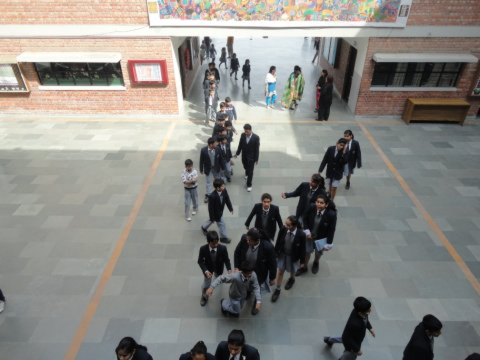
Bal Bharati Public School, Rohini takes pride in giving a safe and secure environment to all its children. As it becomes of any good and reputed school , we take special care about the safety measures in school. Some key features in this regard are:-
- Electrical panels/fittings are checked at a regular basis.
- A guard is posted outside swimming pool from 7:30 am to 2:30 pm.
- Teachers are put on bus duty to ensure a safe journey to all children
- Any student missing the bus/van is brought at the school office wherein the guardian is informed and is made to sit at the reception /HM office till the parent comes.
- Visitor registers are maintained at the gate and all visitors are given visitor passes for security reasons.
- Small children up to class V leave the class in pairs and not singles.
- The roof of the school remains locked at all times.
- A houseman/ayah is stationed outside each toilet block.
- The information of the absentees is conveyed to the parent through SMS facility in the first period.
At the end of day, guards/peons/housemen check each classroom/washroom/play area to ensure no child is left behind.
Efforts are being made to further strengthen Safety & Security in School Campus -
- CCTV cameras have been installed in all school owned buses and the buses are tracked by Transport Incharge.
- Entry to the building from the Administrative Block has been prohibited, entry is only allowed through the Reception.
- The no. of CCTV Cameras in school campus are being increased from 72 to 175. All old cameras are being replaced with new cameras of high resolution. The CCTV display is being reorganized and selective display will be made available to the Principal/Vice Principal and all HMs as well as the Accounts Officer. Control room is being created in the basement with 11 LEDs displaying all 175 cameras through out the day.
- 12 Fire extinguishers have been added to the existing 31 fire extinguishers. The additional fire extinguishers have been placed in Transformer, Electric Panels and Basement activity areas.
- Regular training programs are conducted for school staff to give hands on training to use fire safety equipments like fire extinguishers. The sessions are generally organised by Fire Safety Managment Academy, Rohini.
- The school Prefectorial Board has also been trained for using fire extinguishers.
- Separate wash room and rest room are available for class IV employees. Another rest room along with wash room and drinking area facility is being created at the entry point near Gate No. 1.
- Police verification of all support staff is available. Police verification for school teaching and administrative staff as per CBSE guidelines is in process.
- Sensitization workshops on Child Safety and Protection of Children from Sexual Offences Act 2012 (POCSO) are conducted .The staff is sensitized about the following:
- Safety in school
- Role alignment
- Handling children
- Responsibilities towards children
- Regulations and Laws
- POCSO Act 2012
- Legalities of POCSO

POCSO COMMITTEE
PREVENTION OF CHILDREN FROM SEXUAL OFFENCE COMMITTEE(POCSO)
To safeguard the interests of the learners, BBPS RH has set up the POCSO Committee (set up under the provisions of Prevention of Children from Sexual Offence Act 2012). The Committee works towards safeguarding the learners from the challenges they face in their formative years at school. The Committee takes up age-appropriate initiatives to create awareness about sexual exploitation and to ensure that all learners are aware of their rights and responsibilities towards themselves. Training sessions are conducted for the faculty and staff to recognize and report issues of abuse and neglect. Complaint Boxes are placed strategically and checked regularly by the Committee members to address the complaints if any.
Through its awareness campaigns and programs, the Committee strives to ensure that all learners are treated with dignity and respect at all times. In a series of Awareness programs and School assemblies conducted in the School throughout the year, learner participation is encouraged. Age-appropriate videos are shown and self-defence sessions are also conducted as a part of the Awareness programs.
The POCSO committee comprises of the following members:
| S.no | Name of the Staff | Designation | Mobile No. | E-Mail id |
| 1 | Ms. Geeta Gangwani | Principal | 9810469166 | Geeta.gangwani@rh.balbharati.org |
| 2 | Ms. Radhika Gupta | School Counsellor | 9811092333 | Radhika.gupta@rh.balbharati.org |
| 3 | Ms. Arti Nathani | Primary Teacher | 9873033687 | Arti.nathani@rh.balbharati.org |
| 4 | Mr. Rahul Verma | Advocate District & High Court | 9711328632 | rahulslaw@gmail.com |
| 5 | Ms. Aditi Gupta | Parent BBPS Rohini | 9810108495 | aditi_13@rediffmail.com |
| 6. | Head Girl | Head Girl | 011-27554561 | bbpsrh@balbharati.org |
18 VIDEO LINKS ON POSCO ACT 2012
2.SEXUAL HARASSMENT COMMITTEE
COMMITTEE AGAINST SEXUAL HARASSMENT CHILD ABUSE MANAGEMENT COMMITTEE
“Always, in all ways, invest in Bloom”
With regard to the Supreme Court Judgment and guidelines issued in 1997 to provide for the effective enforcement of the basic human right of gender equality and guarantee against sexual harassment and abuse, more particularly against sexual harassment at workplaces and schools, CBSE has issued circulars since 2004 to all the schools, advising them to establish a permanent cell and a committee and to develop guidelines to combat sexual harassment, violence against women and bullying at the schools. The Protection of Children from Sexual Offences Act & Rules, 2012 deals with all manners of sexual offenses, reporting mechanisms, and subsequent penal consequences.
The Protection of Children from Sexual Offences Act7 2012. These guidelines serve as a method for numerous stakeholders from teachers to community welfare associations to the police to ensure that all possible steps are taken to prevent Child Abuse and empower children to “recognize symptoms of potentially abusive situations. It has further advised the schools to be proactive by developing a conducive atmosphere on the campus, where the status of woman/ girl students is respected and they are treated equally without any bias or discrimination. Keeping the above guidelines in view, BBPS Rohini has constituted a Committee Against Sexual Harassment…
PROCEDURE FOR APPROACHING COMMITTEE
The Committee deals with issues relating to sexual harassment and child abuse at BBPS Rohini. It is applicable to all students, staff and faculty. A complaint of discrimination or sexual harassment may be lodged by the victim or a third party. A written complaint may be addressed to the Chairman of the committee. If the complaint is made to any of the Committee members, they may forward it to the Chairman of the Committee against Sexual Harassment. Here it should be noted that according to the Supreme Court guideline Sexual harassment can be defined as “unwelcome” sexually determined behavior (whether directly or by implication) as:
- Physical contact and advances;
- Demand or request for sexual favors;
- Sexually colored remarks;
- Allow children to engage in sexually provocative games with each other
- Showing pornography and another unwelcome physical, verbal or non-verbal conduct of a sexual nature.
- Showing pornography and another unwelcome physical, verbal or non – verbal conduct by the committee:
The following is sexual harassment and is covered by the committee:
- Eve-teasing, Unsavoury remarks and taunts,
- Jokes causing or likely to cause awkwardness or embarrassment,
- Gender based insults or sexist remarks,
- Unwelcome sexual overtone in any manner such as over telephone (obnoxious telephone calls)
- Touching or brushing against any part of the body and the like,
- Displaying pornographic or offensive or derogatory pictures, cartoons, or sayings.
- Forcible physical touch or molestation
- Physical confinement against one’s will and any other act likely to violate one’s privacy.
FUNCTIONS AND ROLE OF THE COMMITTEE
- WORKSHOPS AND TRAINING MODULES :
BBPS Rohini conducts workshops and peer training sessions for students, parents, and teachers, twice a year. The aim of these workshops will be:
* What constitutes abuse and exploitation?
* Manner of reporting and complaining (how and to whom)
* To address the nature, cause, and effect of abuse
* To counter and deal with the consequences constructively
* Self-disclosure and safety guidelines for potential instances ahead
- EMPLOYEE AWARENESS ABOUT POCSO AND CHILD PROTECTION RIGHTS:
* An annexure highlighting safety rules will be circulated and acknowledged by each employee which makes them aware of their rights as well as duties
* The act against any form of abuse will be put up at a visible board for easy access
* The complaint protocol and manner of reporting will be written alongside and made visible through notice boards and displays.
- MEETINGS AND TIMELY DISCUSSIONS OF THE COMMITTEE:
The Committee will also hold timely meetings, to discuss the plan of actions, potential cases, queries and updates which will be supervised by the Principal Ms. Geeta Gangwani.
This will ensure the functioning and progress of the implemented ideas within the school.
ANNEXURE
SECTION I FUNDAMENTALS OF CHILD PROTECTION
What is a Child Protection Policy?
A Child Protection Policy is a statement of intent that demonstrates the commitment to safeguarding children from harm and makes clear to all in an institution and who come into contact with it what is required in relation to the protection of children, and that child abuse in any form is unacceptable.
Though the main purpose of the policy is to protect children from all forms of harm and create an enabling environment, it is also a tool to enhance the commitment of the organization to provide a child-friendly environment through sensitizing persons associated and enforcing this policy.
- What is Child Abuse?
Child abuse means any form of maltreatment inflicted on a child including physical abuse, sexual abuse and emotional abuse.
Indicators of Abuse:
Physical & Sexual Abuse
- Unexplained burns, cuts, bruises, or welts in the shape of an object
• Bite marks
• Anti social, violent, and/or abrasive behavior
• Problems in school
• Fear of adults
• Drug or alcohol abuse
• Self-destructive or suicidal behavior
• Depression or poor self-image
Emotional Abuse
• Nightmares and bedwetting
• Drastic changes in appetite
• Over compliance or excessive aggression
• Fear of a particular person
• Withdrawal, secretiveness, or depression
• Suicidal behavior
• Eating disorders
Article 23
Parties recognize that a mentally or physically disabled child should enjoy a full and decent life, in conditions that ensure dignity, promote self-reliance and facilitate the child’s active participation in the community.
Article 28
Parties shall take all appropriate measures to ensure that school discipline is administered in a manner consistent with the child’s human dignity and in conformity with the present Convention.
Article 34
Parties undertake to protect the child from all forms of sexual exploitation and sexual abuse.
(a) The inducement or coercion of a child to engage in any unlawful sexual activity;
(b) The exploitative use of children in prostitution or other unlawful sexual practices;
(c) The exploitative use of children in pornographic performances and materials.
Legal framework for Child Protection in India/Delhi
A. The Constitution of India
B. The Protection of Children from Sexual Offences Act, 2012
C. The Juvenile Justice (Care & Protection of Children) Act, 2000 and The Delhi Juvenile Justice (Care & Protection of Children) Rules, 2009
D. The Right of Children to Free and Compulsory Education Act, 2009
SECTION II
Appropriate Standards of Behavior for Staff & Employees Adults should:
i. Provide an enabling environment for children’s personal, physical, social, emotional, moral, and intellectual development.
ii. Encourage and respect other employee’s and children’s voices and views.
iii. Be inclusive and involve all children without selection or exclusion on the basis of gender, disability, ethnicity, religion or any other status.
iv. Be aware of the potential for peer abuse (eg: children bullying, discriminating against, victimizing or abusing children).
- Develop special measures/supervision to protect younger and especially vulnerable children from peer and adult abuse.
- Be aware of high-risk peer situations (eg: unsupervised mixing of older and younger children and the possibility of discrimination against minors).
vii. Avoid placing oneself in a compromising or vulnerable situation when meeting with children.
viii. Meet with a child in a public, central location whenever possible.
- Immediately report the circumstances of any situation which occurs which may be subject to misinterpretation.
- Make oneself aware and educated on the laws, rules, and guidelines related to child protection as amended from time to time.
Complaint Mechanism:
i. Children in institutional care or their representatives can make individual requests or complaints to the director/management of the institution.
ii. In case of complaints against professional staff such as nurses or teachers, among others, working with and for children, a complaint can be made to the Monitoring Committee.
iii. The Committee will appoint a person responsible for attending to all complaints brought before it in a time-bound and confidential manner.
SECTION III
Disciplinary Action
The disciplinary action will be commensurate with the nature of the violation (students)
- Warning
• Written apology
• Bond of good behavior
• Debarring entry into hostel /campus Suspension for a specific period of time Withholding results
• Debarring from exams
• Debarring from contesting elections
• Debarring from holding leadership posts or membership of Committees
• Expulsion
• Denial of admission
• Any other relevant mechanism

The Bal Bharati Public Schools are having their own Grievance Redressal System in an informal manner i.e through direct supervision of the Principal of each school. But in formal sense along with the provision of suggestion boxes, the Grievance Redressal Cell of all the schools was created in 2012. The function of the cell is to look into the complaints lodged by any student, and judge its merit. The Grievance Cell is also empowered to look into matters of harassment. Anyone with a genuine grievance may approach the School Principal or address his/her grievances to the Students’ Grievance Cell. In case the person is unwilling to appear in self, grievances may be dropped in writing at the letterbox / suggestion box of the Grievance Cell placed at the Administrative Block as well as Academic Block of each school.
Objective:
The objective of the Grievance Cell is to develop a responsive and accountable attitude among all the stakeholders in order to maintain a harmonious educational atmosphere in the institute.
A Grievance Cell has been constituted for the Redressal of the problems reported by the Students of the school with the following objectives:
- Upholding the dignity of the school by ensuring strife free atmosphere in the school through promoting cordial Student-Student relationship and Student-teacher relationship etc.
- Encouraging the Students to express their grievances / problems freely and frankly, without any fear of being victimized.
- Suggestion / complaint Box is installed in front of the Administrative Block and Academic Block in which the Students, who want to remain anonymous, put in writing their grievances and their suggestions for improving the Academics / Administration in the school.
- Advising Students of the school to respect the right and dignity of one another and show utmost restraint and patience whenever any occasion of rift arises.
- Advising All the Students to refrain from inciting Students against other Students, teachers and school administration.
- Advising all staffs to be affectionate to the Students and not behave in a vindictive manner towards any of them for any reason.
- Ragging in any form is strictly prohibited in and outside the institution. Any violation of ragging and disciplinary rules are urgently brought to the notice of the School Principal.
MECHANISM FOR REDRESSAL OF GRIEVANCES OF STUDENTS AND STAFF
The students are the main stakeholders in any institution imparting education, and its our endeavour to make all efforts to ensure transparency in all the activities at different stages. Taking this spirit in consideration the school have the set mechanism for students for Redressal of their grievances as under:
The Grievances may broadly include the following complaints of the aggrieved students
- Academic
- Non-Academic
- Grievance related to Assessment
- Grievance related to Victimization
- Grievance related to Attendance
- Grievance related to charging of fees
- Grievance regarding conducting of Examinations
- Harassment by colleague students or the teachers etc.
It is good to air a grievance rather than to keep it bottled up. Protection of human rights is essential for all round development of an individual’s personality to realize the primary needs of the students and staff and secure civil liberties for everybody, a grievance Redressal cell has been constituted. The cell is indented to find solutions for problems like sexual harassment –any kind of physical or mental harassment, complaints regarding class room teaching-class room management, completion of syllabus, teaching methods etc, if and when they arise. The grievance Redressal cell convenes meetings periodically and takes steps to redress the grievance.

Procedure for lodging complaint:
- The students may feel free to put up a grievance in writing/or in the format available in the admin dept. and drop it in boxes.
- The Grievance Cell will act upon those cases which have been forwarded along with the necessary documents.
- The Grievance Cell will assure that the grievance has been properly solved in a stipulated time limit provided by the cell.
Responsibility for Redressal
- The final responsibility for grievance Redressal rests with the Principal of the School.
- The school expects that grievance Redressal be time bound and result oriented. Every grievance is expected to be resolved within a reasonably period.
- The grievance Redressal cell of the school shall monitor status and progress of grievance Redressal and shall furnish report on grievance Redressal position to the Chairman of the school.
Powers
In case of any grievance the members of the cell are empowered to sort out the problems at their level through discussion with students.
In case the members fail to find out any solution then the matter is referred to the Principal/ Chairman for final commitment on the matter.
Considering the nature and depth of the grievances due inquiry is made by the members of the cell and through personal discussion the matter is solved. If anybody is found to be guilty for any kind of nuisance, immediate action is being taken by the School Management.
Exclusions:
The grievance Redressal cell shall not entertain the following issues:
- Decisions with regard to award of scholarship, fee concessions, medals etc;
- Decisions made by the school with regard to disciplinary matters and misconduct.
- Decisions of the university about admissions in any courses offered by the school.
- Decisions by competent authority on assessment and examination results.
Disaster Management Committee:
- A disaster management committee has been set up in the school for the safe evacuation in case of any calamity. School Disaster Management plan helps school community to remain in a state of preparedness at all times to meet fall out of any disaster.
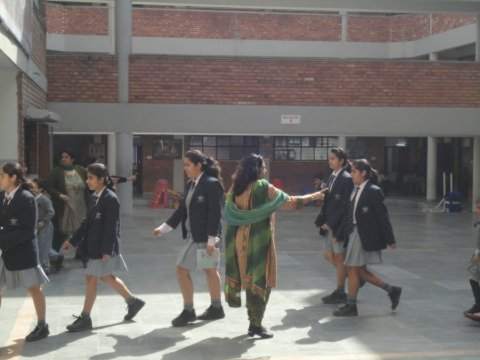
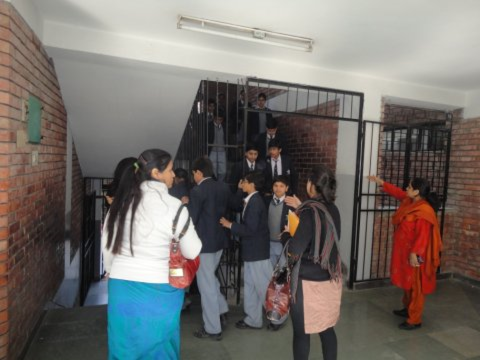
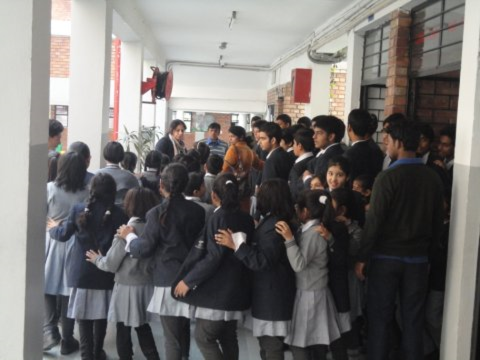
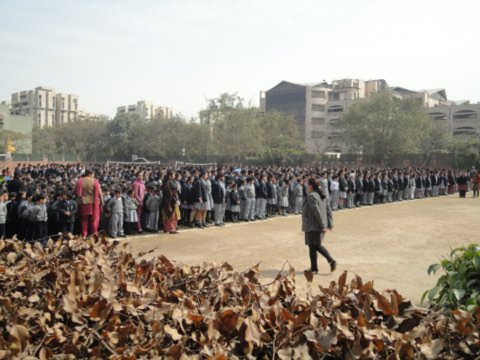
- Extensive Disaster management exercises are conducted through National Disaster Management Authority. For better safety conditions, two fire alarms/sirens have been installed in Block 2 and Block 3 of the school.
- The School Disaster Management programme (SMDP) was initiated in the year 2008 under the able guidance of the Principal Ms. Geeta Gangwani and a core group consisting of Vice Principal, Headmistress I, II & III, Social Science teachers, administrative officer and Physical Education Teachers was formed.
OBJECTIVES OF SDMP
- Identity and manage hazards in school.
- Prepare and respond to emergencies in school.
- Instigates the effects of disaster in school.

ENVIRONMENT POLICY HIGHLIGHTS


DISASTER MANAGEMENT PROGRAMME HIGHLIGHTS